Laos travel guide: temples, history and things to do
ລາວ
Laos is the only landlocked country in Southeast Asia, and the Mekong River runs through almost all of its history. In 1353 Fa Ngum founded the kingdom of Lan Xang — the “land of a million elephants” — with its first capital at Luang Prabang. Around 1560 King Setthathirath moved the capital south to Vientiane, and most of the temples you will see in both cities trace back to these two reigns.
This guide starts with eleven places that tell that story: the old royal town of Luang Prabang (a UNESCO World Heritage Site since 1995), the golden stupa and temples of Vientiane, the mysterious Plain of Jars and the Khmer-era temple of Vat Phou in the far south.
Map of Laos
Tap an area to see its places.
Luang Prabang
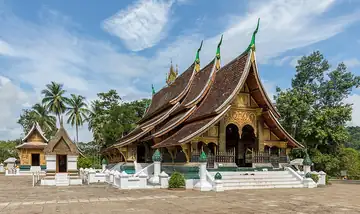 1Wat Xieng ThongວັດຊຽງທອງLuang PrabangThe royal temple of Luang Prabang, with sweeping roofs and a glittering “tree of life” mosaic.
 2Royal Palace Museum (Haw Kham)ຫໍຄຳLuang PrabangThe last kings' palace, now a museum — and home of the Phra Bang, the Buddha image that gave Luang Prabang its name.
 3Mount Phou SiພູສີLuang PrabangThe hill in the middle of Luang Prabang, crowned by a golden stupa and the town's favourite sunset view.
 4Kuang Si FallsຕາດກວາງຊີLuang PrabangTiered limestone cascades and turquoise pools in the forest south-west of Luang Prabang.
 5Pak Ou Cavesຖ້ຳຕິ່ງLuang PrabangTwo river caves filled with thousands of Buddha images, reached by boat up the Mekong.
Vientiane
 6Pha That LuangພະທາດຫຼວງVientianeThe great golden stupa of Vientiane and the national symbol of Laos.
 7Haw Phra Kaewຫໍພະແກ້ວVientianeThe temple built for the Emerald Buddha — the image that now sits in Bangkok.
 8Wat Si SaketວັດສີສະເກດVientianeThe oldest temple still standing in Vientiane, its cloister lined with thousands of small Buddha images.
 9Patuxai (Victory Gate)ປະຕູໄຊVientianeVientiane's victory monument — an arch with Lao decoration and a view from the top.
Xiengkhouang

Champasak

Before you go
- Best time to go
- The dry season, roughly November to April, is the easiest time to travel; November to February is the coolest. The rainy season (about May to October) is greener and quieter but some roads are slow.
- Getting there from Thailand
- Most people cross at the Friendship Bridge between Nong Khai and Vientiane, or fly. Trains run from Bangkok to Vientiane, and the Laos–China Railway links Vientiane with Luang Prabang in about two hours. Check current entry rules and timetables before you go — they change.
- Temple manners
- Cover shoulders and knees, take off shoes where others do, and never touch a monk if you are a woman. At the morning alms round in Luang Prabang, watch quietly from a distance and do not use flash.
- Safety
- Unexploded ordnance from the 1964–1973 bombing still lies in parts of the countryside, especially around Xiengkhouang. Stay on marked paths.